Louise Sheridan, School of Education, University of Glasgow
Edward Beggan, School of Education, University of Glasgow
Why Creative Methods?
We were invited to contribute to an Intensive Learning Programme (ILP) with undergraduate students at a European University. The students were training to become social workers, with hopes of working with young people or people affected by various forms of exclusion and discrimination. Our first thought was to design a session that would involve creative methods to enable the students to learn about using group work when working with young people in community contexts. Using Popular Education and Critical Pedagogical Approaches (Freire, 2005) is core to both of our teaching approaches, therefore it made complete sense to apply these in the ILP. These students will be working in informal and community-based contexts, after all – what could go wrong?
Using Creative Methods to Explore New Ideas
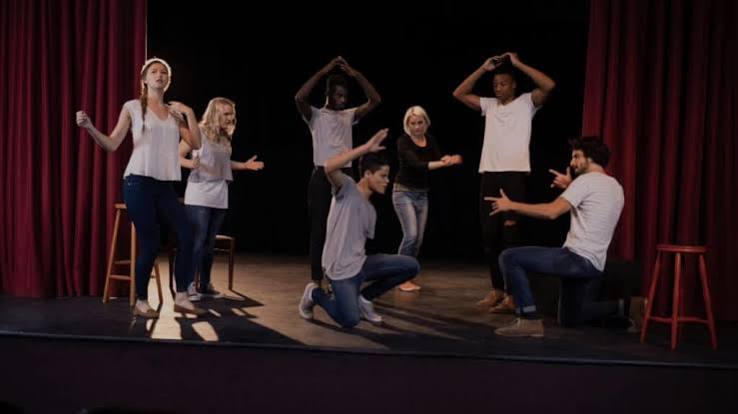
Using creative approaches, such as methods from Boal’s (1979) Theatre of the Oppressed, can provide an engaging means to prompt critical discussion and deeper reflection on taken-for-granted views and new concepts. Our aim for the sessions that we ran during the ILP was to enable students to understand some of the benefits and challenges of using group work with young people in community-based contexts. Buoyed by our enthusiasm for using creative and engaging methods, we incorporated Forum Theatre within the session, which involved some people role-playing scenarios that connected with working with groups of young people. Theatre of the Oppressed is a great example of Active Learning (AL), which is described by Børte et al. (2020, p.601) as an approach that enables students to work together, exploring beliefs and deepening understanding of concepts collectively.
Using AL reflects one of the University of Glasgow’s (2026a) Strategic Priorities, described in the Learning & Teaching Strategy 2036. The priority to help students to build skills and futures emphasises the need to provide ‘opportunities for experiential learning that enable them to succeed while at university, and to contribute and adapt throughout their future working lives’.
Theory Versus Reality: Context Matters
In theory, creative methods such as Forum Theatre (Boal, 1979) provide a conduit for collaborative learning. However, the context must be considered carefully to ensure the right conditions for this type of learning experience. As Sheridan (2020, p.17) suggests, it is important to be mindful of any gaps between teacher and student expectations and ‘supporting the students in negotiating meaning within the learning environment’. In our enthusiasm for providing a ‘fun’ experience to groups of students taking part in the ILP, we did Forum Theatre. Where Beggan and Coburn (2018) propose that ‘Improvisation and flexibility are important and dependent on what participants envisage when offered the opportunity to be creative’ (p. 12) it could be said that there was an assumption that students would be on board with these creative methods with the same enthusiasm as we had as facilitators. Notwithstanding student capability, it became apparent that students were apprehensive. This may have been down to multiple factors that were overlooked including, but not limited to, language barriers contributing to initial apprehension from participants, people felt self-conscious and unsure of what was being asked, and they had only just been introduced to two new academics from a visiting University who were asking them to do something a bit different. This is not to say that students were not enthused or refrained from getting involved merely, that as facilitators, we had to skilfully work the group into feeling comfortable enough to volunteer and participate in the forum theatre activity. Our shared previous knowledge, experience and qualification in professional youth work practice was essential in this situation, which is often the case when teaching community-based practice in education. Drawing on this distinct understanding of working with students often gives us deeper insight into encouraging them to participate where we adapt and are reflexive in our approach. As such we like to be prepared and have extra ‘tools’ to use in these circumstances.
Trying Out a New Idea: Watch Out for the Curve Ball!

As professionals, whether that is as a social worker, youth worker, teacher, or even lawyer, we must deal with the unexpected. Considering the importance of building graduate attributes and skills, we introduced the notion of curve balls. This was a set of scenarios written on the back of images of a ball. The scenarios depicted a range of difficult situations that might transpire whilst working with groups. To reflect the theme of fun and engagement, these were numbered 1 to 6 and at various points throughout the session, a student was invited to roll a dice(die). The corresponding ‘curve ball’ was read out and the students were invited to consider how they would handle the situation.
Our Reflections
If we had the chance to do it all again, whether an ILP session, or similar. Or when planning teaching sessions with new groups of students, there are (of course) some changes that we would make. First things first, it is vital to focus on the aim of the session to avoid what Frost and Ackrill (2025) refer to as ’curriculum misalignment’ (p.13). We spent too much time discussing the principles of Theatre of the Oppressed and not spending enough time on exploring group work theory. This was not necessary; it would have been enough simply to give clear instructions on what an activity involves. This exemplifies what Sheridan (2020) refers to as a failure to meet students‘ expectations. Students were expecting more about group work theory. We should have incorporated more of the content of a handout that we produced, that examined key considerations for working with groups.
Taking account of the context is vital. We met the groups of students for the first time, and our expectations were perhaps too high in relation to using Forum Theatre. Although this method calls for just a few people to act and improvise, our reflection is that Image Theatre would have been a safer, more comfortable option for students with whom we are unfamiliar. Image Theatre involves conveying a scenario in a still form (using participants bodies). From previous experience, even the timidest person can participate without too much discomfort. We feel that Image Theatre could be used for teaching many Higher Education (HE) subjects. It provides the opportunity for students to demonstrate what they know about a specific topic, establishing a baseline. The lecturer can then facilitate discussion, asking prompt questions that get students to think more deeply and perhaps transform thinking. We believe that subject-related Curve Ball scenarios could also be used when teaching a range of courses. The scenarios should be evidence-based and relevant to the topic. Reflecting the intentions set out in the University of Glasgow’s (2026b) Embedding Employability Framework, dealing with Curve Ball scenarios aligns well with the ‘Cognition’ Transferable Skill. It enables students to practice analysis and problem-solving skills.
A Note on Limitations
This blog is based on our reflections and some basic feedback given as part of the ILP. We know we cannot be as bold to make big claims. However, with substantial experience of applying Active Learning approaches within our teaching, and positive feedback along the way, we feel confident that Image Theatre (Boal, 1979) and Curve Ball Scenarios could provide engaging learning experiences for students beyond the School of Education. A Scholarship of Teaching and Learning project, with ethical approval from the University’s SoTL Ethics Committee is needed and we will (hopefully) find time to make that happen.
References
Beggan, E. and Coburn, A. (2018) Creating ‘one big masterpiece’ – Synthesis in Creative Arts Youth Work. Concept: The Journal of Contemporary Community Education Practice Theory, 9(2), 15. Available at: https://concept.lib.ed.ac.uk/Concept/article/view/2806
Boal, Augusto. (1979). Theatre of the Oppressed. London: Pluto Press.
Børte, K., Nesje, K., & Lillejord, S. (2020). Barriers to student active learning in higher education. Teaching in Higher Education, 28(3), 597–615. Available at: https://doi-org.ezproxy2.lib.gla.ac.uk/10.1080/13562517.2020.1839746
Freire, P. (2005). Teachers as Cultural Workers. Boulder: Westview Press
Frost, D. and Ackrill, R. (2025). The multiple dimensions of curriculum mapping: designing a comprehensive outcomes-based framework. London Review of Education, 23(1), 17. https://doi.org/10.14324/LRE.23.1.17.
Ribeiro-Silva, E., Amorim, C., Aparicio-Herguedas, J. L., & Batista, P. (2022). Trends of active learning in higher education and students’ well-being: A literature review. Frontiers in Psychology, 13(844236). https://doi.org/10.3389/fpsyg.2022.844236
Sheridan, N. (2020). A two-step model for creative teaching in higher education. Journal of Learning Development in Higher Education, (18). https://doi.org/10.47408/jldhe.vi18.574
University of Glasgow (2026a). Learning and Teaching Strategy 2036. [online] Available at: https://www.gla.ac.uk/media/Media_842671_smxx.pdf
University of Glasgow (2026b). Learning and Teaching Strategy 2036. [online] Available at: https://www.gla.ac.uk/myglasgow/learningandteaching/studentskills/

